Hosting a Neighbourhood Conversation Without a Fixed Agenda
A neighbourhood conversation without a fixed agenda can make room for useful local ideas. Set a welcoming tone, share speaking time, and leave with clear notes.
The common mistake in a neighbourhood conversation is arriving with a hidden agenda: a preferred solution, a stack of talking points, or an expectation that everyone will agree. That can make a casual gathering feel like a decision has already been made. A neighbourhood conversation without a fixed agenda works better when the host names one open question, makes room for different voices, and records ideas without pretending the group has voted.
This is a small gathering for listening and noticing, not a substitute for a public hearing or an official process. Think of it like setting out a kitchen table: the table gives people a place to meet, but it does not dictate what they must say. A simple plan over the week before, the gathering itself, and the day after helps keep the conversation relaxed without leaving people unsure what happens next.
One week before
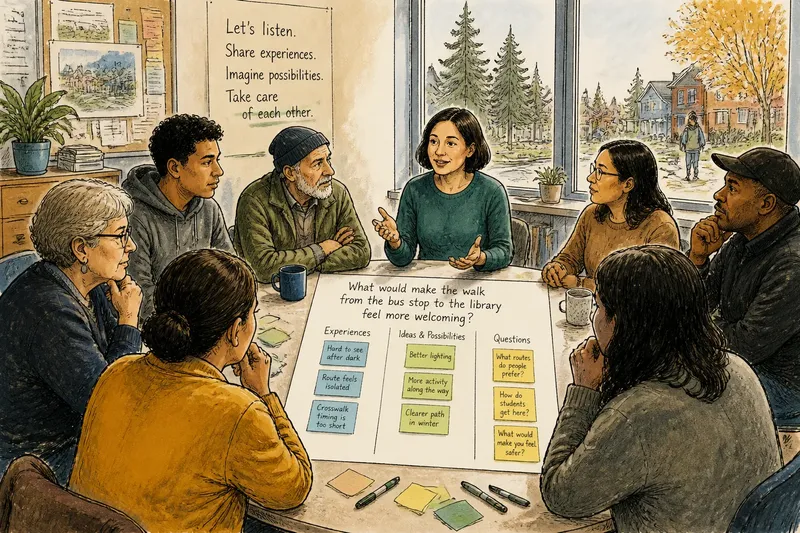
Choose a question broad enough to invite several kinds of experience, but focused enough that people can answer it in a few minutes. “What would make the walk from the bus stop to the library feel more welcoming?” gives neighbors something concrete to picture without steering them toward a particular fix. Avoid questions that quietly ask for approval, such as “Wouldn’t a new bench solve the problem?”
Decide who should be invited and how. A note on a community bulletin board, a message through a neighborhood association, or a few direct invitations can reach people who do not follow the same online channels. Keep the invitation plain: state the open question, explain that the gathering is informal, say how notes will be shared, and mention any access details people need before deciding to come.
Pick a familiar, accessible place where conversation is possible without requiring people to buy anything. A library meeting room or community hall may suit a small group; check the room’s availability and accessibility arrangements with the venue. If the gathering is outdoors, think about weather, seating, noise, and a nearby indoor alternative. Set a modest time window and tell invitees they may listen without speaking.
Prepare only a few materials: a large sheet of paper or whiteboard, markers, sticky notes, and a way to capture the notes afterward. Ask someone you trust to help welcome people or write down ideas, so the host is not trying to facilitate and record every exchange at once. Tell that person the aim is to capture themes and questions, not attach names to comments.
The day before
Send a short reminder with the location, start and finish time, and the question. Include a contact method for someone who needs a clarification or an accommodation. Review the question once more: if it contains a proposed answer, rewrite it as an invitation to describe needs, experiences, or possibilities.
Agree with your helper on a few light-touch ground rules. People can speak from their own experience, leave room for others, and disagree with an idea without dismissing the person who raised it. Explain that the conversation is not an official decision-making meeting and that the notes will represent what was discussed, not a community mandate.
During the gathering
Welcome people as they arrive and point out the paper or board where shared ideas will go. Start by stating the purpose and reading the open question aloud. Give everyone a quiet moment to think before the first person speaks; a pause can help people who prefer to gather their thoughts rather than compete for the floor.
For the first round, invite each person to offer one thought, pass, or write instead of speaking. Keep turns brief and use a gentle invitation to balance the conversation if one voice is taking over: “Let’s hear from someone who hasn’t spoken yet.” Avoid calling on anyone who has chosen to pass. Once everyone has had an opening, let people respond to themes they heard, while keeping the original question visible.
Record ideas in neutral language. If someone says, “I can’t see the path after dusk,” write the concern as a need for a clearer, more comfortable route after dark, rather than jumping straight to a proposed installation. Separate experiences, possible ideas, and unanswered questions on the page. That distinction keeps a suggestion from looking like an agreed plan.
Say, “Imagine a few neighbors meet to discuss how the walk to the library feels. One person mentions poor visibility, another says the route feels isolated, and a third suggests asking others about their preferred route. The shared notes could preserve all three points and list the follow-up question, without implying that the group chose a lighting project.” This kind of record shows both the substance and the limits of the conversation.
After people leave
Before everyone goes, read back the main themes and ask whether the notes have missed or misrepresented anything. Invite people to add a final thought on a sticky note if they would rather not speak. Close by saying when and where the notes will be available, and whether the host intends to share them with a local group or simply with attendees.
Within a few days, tidy the notes without polishing away disagreement. Remove personal details that people did not agree to share, group repeated ideas carefully, and mark unresolved questions as unresolved. Send or post the record through the channel named in the invitation. If no next step has been agreed, say so plainly instead of implying that someone else will take action.
Keep the record modest: date and place, the question, a short note that the gathering was informal, themes raised, and outstanding questions. A brief note about who prepared it can help readers ask for clarification. Do not label it minutes if the group did not conduct formal business; “conversation notes” is clearer and sets expectations.
What should you say?
How many people should I invite?
Invite a small enough group that people can speak without a microphone or formal turn-taking system. If interest exceeds the room’s comfortable capacity, consider holding another informal conversation rather than squeezing everyone into a setting where only a few can contribute.
What if the conversation becomes heated?
Pause and restate the shared question, then ask speakers to describe the concern behind their position. If people cannot continue respectfully, take a short break or end the gathering and record that the discussion did not reach every topic.
Should I share the notes publicly?
Share them with the audience you named in the invitation, and ask before including identifiable personal details. If you plan to pass them to a council office, neighborhood association, or other group, make that purpose clear and present the notes as informal input rather than an official recommendation.
A neighbourhood conversation without a fixed agenda succeeds when people can recognize their contributions in the record, including differences that remain. Keep the question open, the invitation honest, and the notes faithful. That leaves neighbors with something useful to refer to—and no false impression that a friendly discussion settled a public decision.